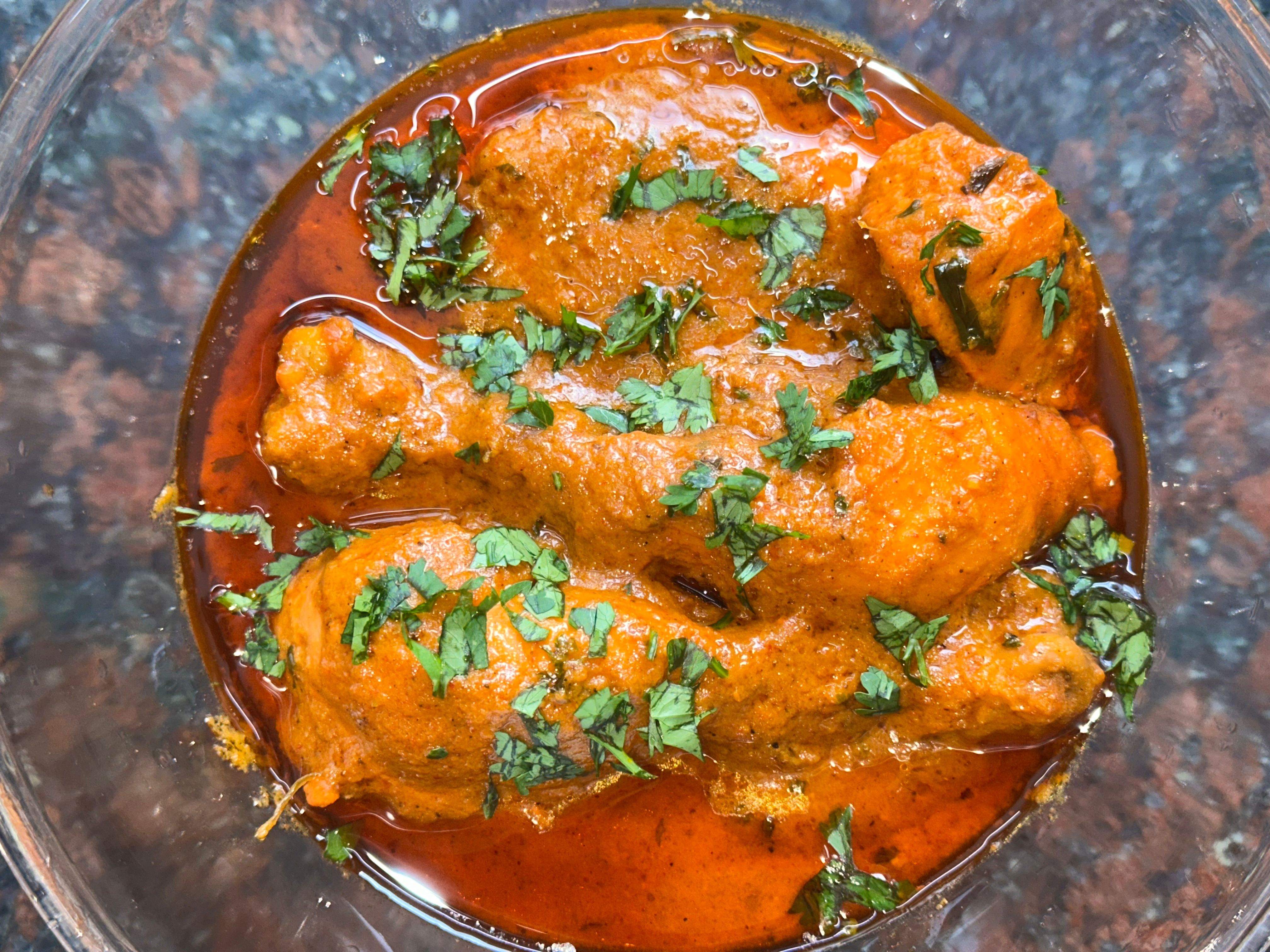
Photo: Food_Lenz_Vlogs / Pexels
The diets react (see scores below)
Common Ingredients
- chicken
- yogurt
- fried onions
- almonds
- ginger
- garlic
- garam masala
- green chili
- saffron
- coriander
Specific recipes may vary.
Incompatible with 5 of 11 diets
Diet Ratings
Dum Ka Murgh is a slow-cooked Indian chicken dish that is generally keto-friendly in its protein and fat profile, but has a few ingredients that warrant caution. Chicken is an excellent lean-to-moderate protein source. Yogurt adds some carbs (roughly 4-6g per serving depending on quantity), and fried onions are a notable concern — onions are moderate in carbs and frying them concentrates their sugars, typically adding 5-10g net carbs per serving. Almonds are keto-friendly healthy fats. Ginger, garlic, garam masala, saffron, and coriander are spices used in small amounts and contribute minimal net carbs. Green chili is low carb. The combination of yogurt and fried onions together can push a generous serving toward or past the cautious carb threshold, especially if onions are used liberally as is traditional. In a moderate, portion-controlled serving, this dish is manageable on keto, but the fried onions are the primary concern.
Strict keto practitioners may flag yogurt entirely due to its lactose content and potential insulin response, preferring full-fat cream or cream cheese substitutes. Some also argue that the caramelized sugars in fried onions make them incompatible regardless of portion size.
Dum Ka Murgh is a slow-cooked Indian dish whose very foundation is chicken, a direct animal product that is categorically excluded from a vegan diet. It also contains yogurt, a dairy product derived from animal milk, making it doubly non-vegan. Both of these animal-derived ingredients are present in substantial quantities as core components of the dish, not trace amounts. The remaining ingredients — fried onions, almonds, ginger, garlic, garam masala, green chili, saffron, and coriander — are all plant-based, but they cannot redeem a dish built around two disqualifying animal products.
Dum Ka Murgh contains two clear non-paleo ingredients that push it into 'avoid' territory. Yogurt is a dairy product, excluded under standard paleo rules. Fried onions raise a concern about the frying medium — if fried in seed oils (canola, sunflower, vegetable oil, which is typical in Indian cooking), that adds another non-paleo element. The remaining ingredients — chicken, almonds, ginger, garlic, garam masala, green chili, saffron, and coriander — are all paleo-approved. The dish could theoretically be adapted (omitting yogurt, using coconut milk or a paleo-friendly substitute, and frying onions in ghee or coconut oil), but as traditionally prepared, the yogurt alone disqualifies it.
Some paleo practitioners, particularly those following the Primal Blueprint by Mark Sisson, accept full-fat fermented dairy like yogurt in moderation, arguing that fermentation reduces lactose and improves digestibility. Under this lens, the dish could be rated 'caution' rather than 'avoid,' especially if the onions are fried in a paleo-friendly fat like ghee.
Dum Ka Murgh is a slow-cooked Indian chicken dish with several Mediterranean-compatible ingredients: chicken (poultry, acceptable in moderation), yogurt (dairy, moderate use is fine), almonds (nuts, encouraged), ginger, garlic, and aromatic spices like saffron and coriander are all plant-based flavor enhancers consistent with Mediterranean principles. However, fried onions add significant oil of unspecified type (likely not olive oil) and extra calories from frying, and there is no olive oil in this dish. The overall dish is protein-centered around poultry with dairy, which fits a 'moderate' Mediterranean category. It contains no red meat, no refined grains, and no added sugars. The spice profile is not traditionally Mediterranean but does not violate any core principles. The main concerns are the frying method and absence of olive oil as the fat source.
Some modern Mediterranean diet practitioners take a broader, pattern-based view and would note that yogurt-marinated, spice-rich poultry dishes — even from non-Mediterranean cuisines — align well with the diet's anti-inflammatory, whole-food philosophy, potentially rating this more favorably if olive oil were substituted for the frying fat.
Dum Ka Murgh is fundamentally incompatible with the carnivore diet. While it does contain chicken as the primary protein, the dish is heavily laden with multiple plant-derived ingredients that are strictly excluded: almonds (nuts), fried onions (vegetable), ginger (root spice), garlic (vegetable/spice), garam masala (a blend of multiple plant spices), green chili (vegetable), saffron (plant-derived spice), and coriander (plant-derived herb/spice). Yogurt is a dairy ingredient that is debated but not the primary concern here. The combination of numerous plant-based spices, aromatics, nuts, and vegetables makes this dish essentially a plant-spice-forward preparation that cannot be adapted to carnivore standards without completely reconstructing it. The dish as presented is a clear avoid across all tiers of the carnivore diet.
Dum Ka Murgh contains yogurt, which is a dairy product explicitly excluded from the Whole30 program. Yogurt is specifically listed as a prohibited dairy item. All other ingredients — chicken, fried onions (if fried in compliant oil), almonds, ginger, garlic, garam masala, green chili, saffron, and coriander — are Whole30 compliant. However, the yogurt marinade is a core, structural component of this dish and cannot simply be omitted without fundamentally changing the recipe. The dish as traditionally prepared is not Whole30 compatible.
Dum Ka Murgh contains multiple high-FODMAP ingredients that make it unsuitable during the elimination phase. Garlic is one of the highest-FODMAP foods known, rich in fructans, and is a core ingredient in this dish. Fried onions are also very high in fructans and are used in significant quantities in this preparation. Yogurt contributes lactose, which is a disaccharide FODMAP. Almonds become high-FODMAP above 10 nuts per serving, and Indian recipes typically use more than that. Taken together, the combination of garlic, fried onions, and yogurt alone makes this dish clearly high-FODMAP at any standard restaurant or home serving size.
Dum Ka Murgh is a slow-cooked Indian chicken dish with several DASH-compatible ingredients: lean chicken (excellent protein source), yogurt (typically full-fat in traditional preparation, though low-fat could be substituted), almonds (heart-healthy fats, magnesium, fiber), ginger, garlic, and spices like garam masala and saffron. These ingredients align well with DASH principles. However, the fried onions introduce additional saturated or vegetable fat depending on oil used, and the full-fat yogurt traditionally used conflicts with DASH's preference for low-fat dairy. The dish typically contains moderate sodium through spice blends and preparation. The overall dish is not heavily processed and avoids red meat, added sugars, and explicitly high-sodium ingredients, but the frying element and potential use of full-fat dairy push it into the caution zone. With modifications — low-fat yogurt, minimal oil for onions, and portion control — it could approach an approved status.
NIH DASH guidelines explicitly call for low-fat dairy and limiting added fats; the traditional preparation with full-fat yogurt and deep-fried onions is inconsistent with these specifications. However, updated clinical interpretations noting that full-fat dairy may not adversely affect cardiovascular outcomes, and that plant-based unsaturated fats are acceptable, suggest that a modified version of this dish could be considered DASH-compatible by many practitioners.
Dum Ka Murgh is a slow-cooked Indian chicken dish with a generally favorable macro profile for the Zone Diet, but requires careful portioning and modification. The primary protein — chicken — is lean and Zone-approved. Yogurt adds protein and some carbohydrate, and is a favorable dairy choice. Almonds contribute monounsaturated fat, which aligns well with Zone fat guidelines. Anti-inflammatory spices (ginger, garlic, saffron, coriander, garam masala) and green chili are all polyphenol-rich and strongly in line with Sears' anti-inflammatory focus. The main concerns are: (1) fried onions, which add refined carbohydrates with a moderate-to-high glycemic index and likely introduce omega-6-heavy seed oils from frying — both are cautionary in Zone; (2) the fat content may exceed Zone targets depending on how much oil was used for frying; (3) the dish as traditionally prepared lacks low-glycemic vegetables, which are the foundation of Zone carbohydrates. To bring this fully into Zone alignment, a practitioner would reduce fried onions, pair the dish with a large serving of non-starchy vegetables, ensure the chicken portion is approximately 3 oz (one Zone meal's worth), and confirm fat content is primarily from almonds rather than frying oil. As a restaurant or home-cooked dish, the fat and carb ratios are difficult to control precisely.
Some Zone practitioners may score this higher (7) arguing that the dish's dominant macros — lean chicken protein, moderate yogurt carbs, almond-based fat — can approximate Zone blocks well if portion-controlled, and that fried onions represent a small fraction of total carbohydrates. Others following Sears' stricter anti-inflammatory later writings (The Anti-Inflammation Zone) would dock points more firmly for the frying oil, likely keeping this at a 5.
Dum Ka Murgh is a slow-cooked Indian chicken dish with a strong anti-inflammatory ingredient profile. Chicken (lean poultry) is a moderate-category protein that is acceptable and broadly supported. Ginger and garlic are well-established anti-inflammatory spices with documented effects on CRP and NF-κB pathways. Garam masala typically contains cumin, coriander, cardamom, cinnamon, and cloves — all of which have antioxidant and anti-inflammatory properties. Green chili contains capsaicin, a known anti-inflammatory compound. Saffron contains crocin and safranal, which have shown antioxidant activity in research. Coriander adds additional polyphenol content. Almonds contribute vitamin E, healthy monounsaturated fats, and magnesium — all anti-inflammatory. Yogurt (low-fat or full-fat depending on preparation) is in the moderate category; it contains probiotics that may reduce gut-derived inflammation, though full-fat versions introduce more saturated fat. The main concern is fried onions: deep-frying in refined seed oils (common in South Asian cooking) introduces oxidized omega-6 fatty acids, which are pro-inflammatory. If fried in ghee or a small amount of a better oil, the concern diminishes. The overall dish is overwhelmingly driven by lean protein and anti-inflammatory spices, placing it firmly in the approve range despite the fried onion caveat.
The fried onions are typically prepared in refined vegetable or seed oils high in omega-6 fatty acids — a practice that most anti-inflammatory protocols (including Dr. Weil's framework) caution against. Additionally, traditional recipes may use full-fat yogurt and ghee, adding saturated fat that some anti-inflammatory practitioners flag as pro-inflammatory, though emerging research increasingly views ghee and fermented dairy more favorably.
Dum Ka Murgh is a slow-cooked braised chicken dish with a yogurt-based marinade, which provides a solid protein foundation and probiotic benefit. The chicken itself is GLP-1 friendly, and yogurt adds protein and digestibility. However, several ingredients introduce meaningful concerns for GLP-1 patients. Fried onions (birista) are a core component and add significant fat and are harder to digest due to the frying process. Almonds contribute healthy unsaturated fats but also add fat load per serving. Green chili may worsen reflux or nausea in GLP-1 patients with slowed gastric emptying. Garam masala is a moderately spicy spice blend that is generally tolerable but can be irritating for sensitive GI tracts. Saffron, ginger, garlic, and coriander are all low-concern. The overall dish is moderately high in fat due to fried onions and almonds, which is the primary limiting factor. If prepared with minimal fried onion content and a smaller almond quantity, the dish improves considerably. As typically prepared in restaurant or traditional home settings, portion control and fat content are the key concerns.
Some GLP-1-focused dietitians would rate this more favorably, noting that the yogurt marinade and slow-cooking method make the chicken very tender and easy to digest, and that the dish avoids seed oils and ultra-processed ingredients. Others would flag the fried onion component and spice level as reliable GI triggers, particularly in patients in early weeks of GLP-1 therapy when nausea and reflux are most pronounced.
*See how scores were generated at our methodology page.
Nutritional profile
Six traits that cut across every diet.
Fiber & Plants
How much whole-plant food and fiber it delivers.
Healthy Fats
The quality of its fats (unsaturated, omega-3).
Whole / Unprocessed
How close it is to its natural, unprocessed form.
Gut Gentle
How easy it is on digestion (low FODMAP, few irritants).
Low Glycemic
How little it spikes your blood sugar.
Protein Density
How much protein it packs per calorie.
Controversy Index
Higher controversy = more disagreement between diets.
Diet-Specific Tips
 Keto — 5/10
View tips
- Chicken is a high-quality keto-compatible protein
- Fried onions concentrate sugars and add meaningful net carbs — primary concern
- Yogurt contributes moderate carbs via lactose; full-fat versions preferred
- Almonds provide healthy fats and are keto-friendly
- Spices (garam masala, saffron, ginger, garlic) contribute negligible carbs in cooking quantities
- Portion size is critical — traditional serving amounts may challenge the 20-50g daily carb limit
 Mediterranean — 5/10
View tips
- Chicken (poultry) is acceptable in moderation per Mediterranean guidelines
- Yogurt is a moderate-use dairy ingredient consistent with the diet
- Almonds are a Mediterranean-approved nut
- Fried onions introduce unspecified frying oil, likely not extra virgin olive oil
- No red meat, refined grains, or added sugars
- Spices and aromatics (garlic, ginger, saffron, coriander) are compatible with Mediterranean flavor principles
- Dish is whole-food based with no highly processed ingredients
 DASH — 5/10
View tips
- Lean chicken is a DASH-approved protein source
- Almonds provide heart-healthy unsaturated fats, magnesium, and fiber aligned with DASH
- Full-fat yogurt traditionally used conflicts with DASH low-fat dairy requirement
- Fried onions add extra fat; preparation method significantly impacts healthfulness
- Anti-inflammatory spices (ginger, garlic, saffron, coriander) are DASH-neutral or beneficial
- Moderate sodium content — no high-sodium processed ingredients but spice blends vary
- Substituting low-fat yogurt and minimizing frying oil would significantly improve DASH compatibility
 Zone — 6/10
View tips
- Lean chicken is an ideal Zone protein source
- Yogurt is a favorable low-glycemic dairy carbohydrate
- Almonds provide Zone-approved monounsaturated fat
- Fried onions increase glycemic load and likely introduce omega-6 seed oils from frying
- Rich anti-inflammatory spice profile (ginger, garlic, saffron) aligns with Sears' polyphenol emphasis
- Dish lacks low-glycemic vegetables; should be paired with a large vegetable portion for Zone balance
- Fat quantity may be difficult to control without home preparation
 Anti-Inflammatory — 7/10
View tips
- Lean poultry (chicken) — acceptable moderate protein source
- Ginger and garlic — potent anti-inflammatory compounds, well-evidenced
- Garam masala spices (cinnamon, cloves, cardamom) — rich in antioxidants and polyphenols
- Green chili — capsaicin has anti-inflammatory properties
- Saffron — contains crocin with antioxidant activity
- Almonds — vitamin E, monounsaturated fats, anti-inflammatory micronutrients
- Yogurt — probiotic benefits, but saturated fat content depends on fat level
- Fried onions — potential concern if fried in refined high-omega-6 seed oils
- Slow-cooking method (dum) preserves nutrients and avoids high-heat oxidation
 GLP-1 Friendly — 5/10
View tips
- Chicken is a high-quality lean protein source — positive
- Yogurt marinade adds protein and supports digestibility — positive
- Fried onions (birista) add significant fat and are harder to digest — negative
- Almonds contribute unsaturated fat but increase overall fat load per serving — mixed
- Green chili may worsen GLP-1-related nausea, reflux, or GI sensitivity — negative
- Garam masala is mildly spicy and may irritate sensitive stomachs — mild negative
- No refined grains, no added sugars, no carbonation — positive
- Slow-cooked preparation makes protein tender and easier to digest — positive
- Portion sensitivity: a small serving is more GLP-1 friendly than a full restaurant portion — important caveat